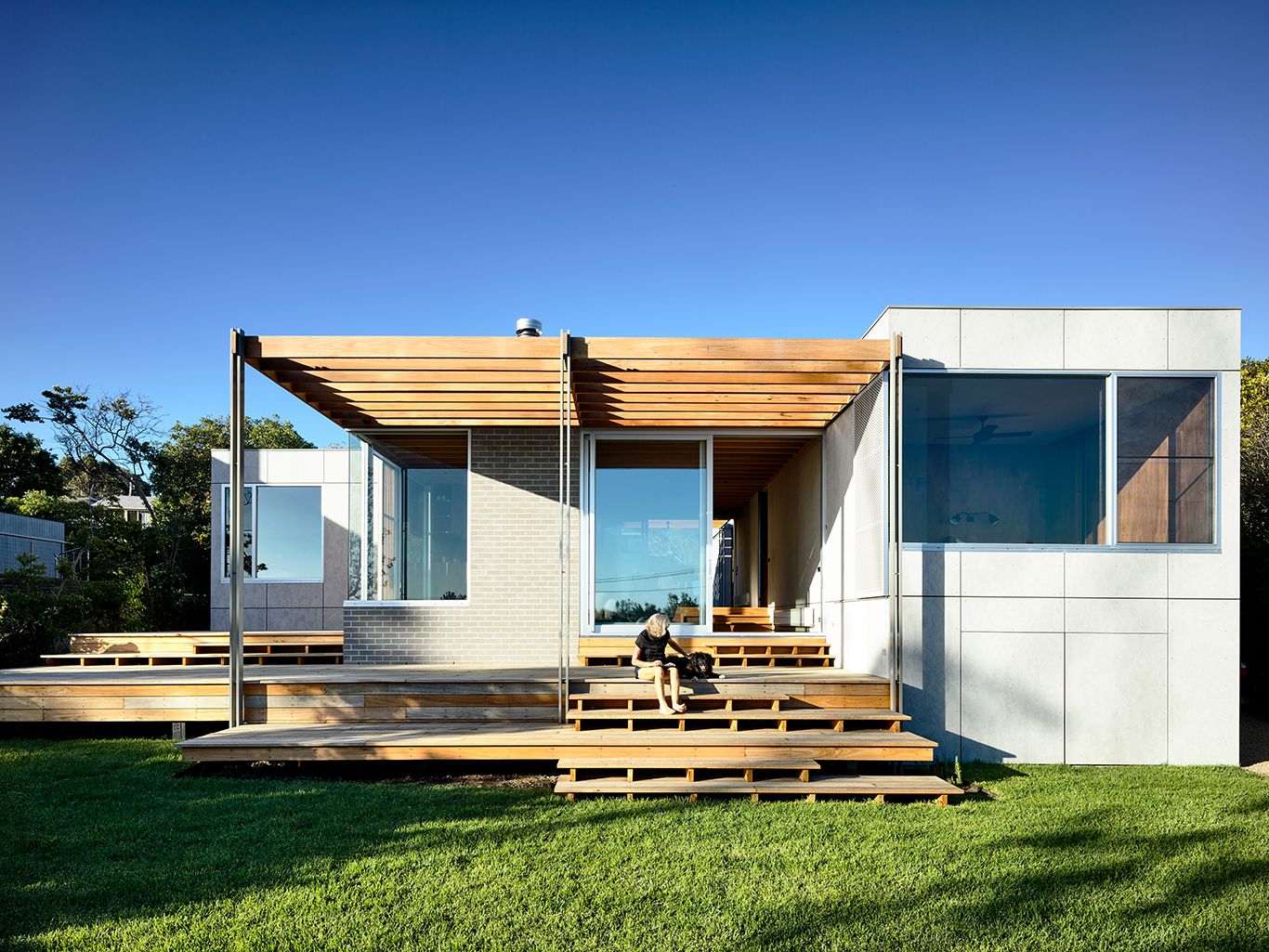

A simple rectangular plan arranges sleeping inland and living oceanward. In cross section, it’s an extrusion formed by an array of deep beams and insulated concrete wall panels. But it’s the long section that holds the key to the nature of this earthing adjacent to Great Ocean Road on the land of the Eastern Maar and Wadawurrung Peoples.

The northern end is effectively wedged into the sloping terrain. Here bedrooms are orientated upwards to the forest via an adjacent hillside garden. They feel calm and grounded.
By contrast the southern end opens out to a terrace on grade and towards the sea. Here the living space exploits the full girth of the house to frame the expanse and distance of the horizon.
The concrete plinth extends to form the roof, becoming another of the many lookout points discovered along the Great Ocean Road. Here the panorama unfolds into a sensory experience of connection to land, water and sky.
Initially deemed unbuildable by local authorities during the protracted approvals process, the bushfire resilient envelope of concrete and fire-rated windows enabled the pathway to eventual certification and construction. If this heavy touch architecture shares material and structural qualities of civic infrastructure, interior as underpass, roof terrace bridging sea with forest, the blackbutt lining to secondary walls and most joinery domesticates it.


